
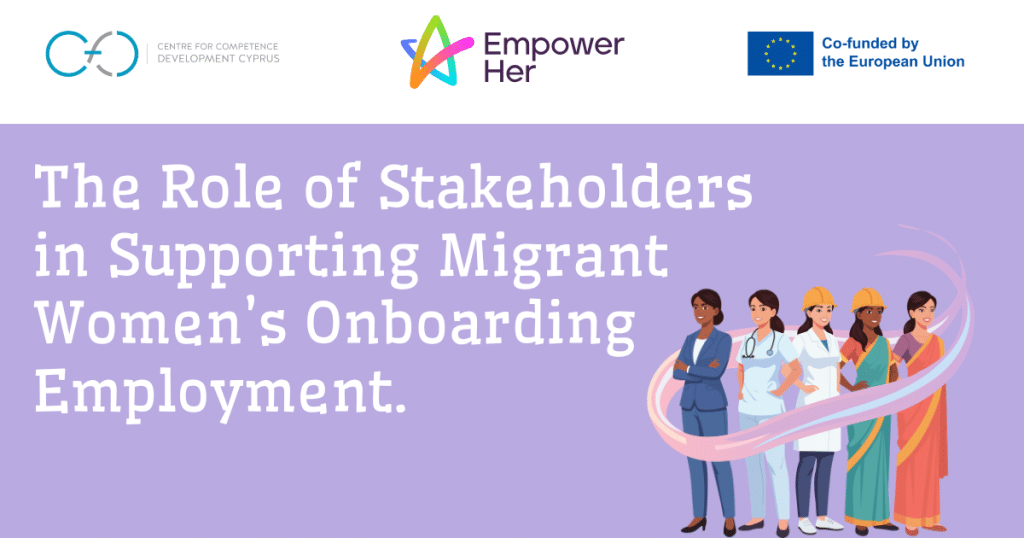
Migrant women bring valuable skills, experience, and perspectives to the workforce. When they enter employment in a new country, effective onboarding can help them quickly understand workplace expectations, build professional relationships, and apply their abilities with confidence. This process works best when different stakeholders collaborate to create clear and supportive pathways into employment.
Starting a job in a new environment often involves learning new procedures, communication styles, and organisational cultures. A structured onboarding process helps make this transition efficient and positive. It provides practical guidance, encourages teamwork, and supports professional growth from the very beginning. When onboarding is well designed, migrant women can fully contribute their knowledge and talents to their roles.
Stakeholders each play an important part in this process. Employers can offer clear guidance, mentoring, and opportunities to learn on the job. Training providers can deliver targeted programmes that strengthen professional, language, and digital skills relevant to the workplace. Community organisations and local services can facilitate connections, share information about available opportunities, and support access to networks that open doors to further development.
Strong communication between stakeholders makes supporting migrant women’s onboarding more effective. When organisations coordinate their actions and share information, support becomes more consistent and easier to navigate. This collaboration also helps create inclusive workplaces where diversity is recognised as an asset and where employees can develop their skills and progress in their careers.
The EmpowerHer project demonstrates how partnerships between educators, employers, and community actors can create meaningful onboarding experiences. By combining practical training, collaboration with employers, and accessible learning opportunities, the project supports migrant women in applying their strengths and advancing in the labour market.
Supporting inclusive onboarding is not only about integration into a new workplace. It is about recognising talent, encouraging participation, and building environments where everyone can succeed and contribute. Through cooperation and shared responsibility, stakeholders can create stronger organisations and more inclusive labour markets that benefit individuals, businesses, and society.
proud member of